Extraction and classification
Useful information is trapped in free text
Complaints, notes and reviews hold answers that no report can reach, because they are sentences. I build pipelines that label and extract what matters, with a measured error rate, and load it where your reports can use it.
WHEN TEAMS CALL
When text classification helps
- Feedback is read one message at a time.
- Categories are applied differently by each person.
- You know volumes but not reasons.
- Important messages are found late.
When it is not the right fit. If you have a few hundred items, reading them will teach you more.
HOW I WORK
Text classification, step by step
Each step ends with something you can look at, so nothing is built on a guess.
Agree the labels
We define each category with examples, including what does not belong in it.
Label a sample by hand
A checked sample is what the pipeline is measured against.
Use the simplest method that works
Rules, classic NLP or a language model, chosen on measured results and running cost.
Handle doubt
Low-confidence items go to review instead of being forced into a category.
Load it into reporting
Labels and extracted fields join your other data, so reasons can be counted over time.
WHAT YOU GET
Deliverables
- A repeatable extraction or classification pipeline
- A measured error rate on your own data
- A review queue for uncertain items
- Fields ready for Power BI or SQL
WHAT I NEED
To get started
A sample of the text, with personal details removed where needed, and the questions you want to answer.
Further reading: the scikit-learn notes on model evaluation.
QUESTIONS
Before you ask
Do you always use a large language model?
No. For stable categories a smaller method is often as good and cheaper to run. I compare before choosing.
How is accuracy measured?
Against a sample labeled by people who know the subject, reported per category.
Can it work in more than one language?
Often yes. Each language is tested separately before it is relied on.
RELATED WORK
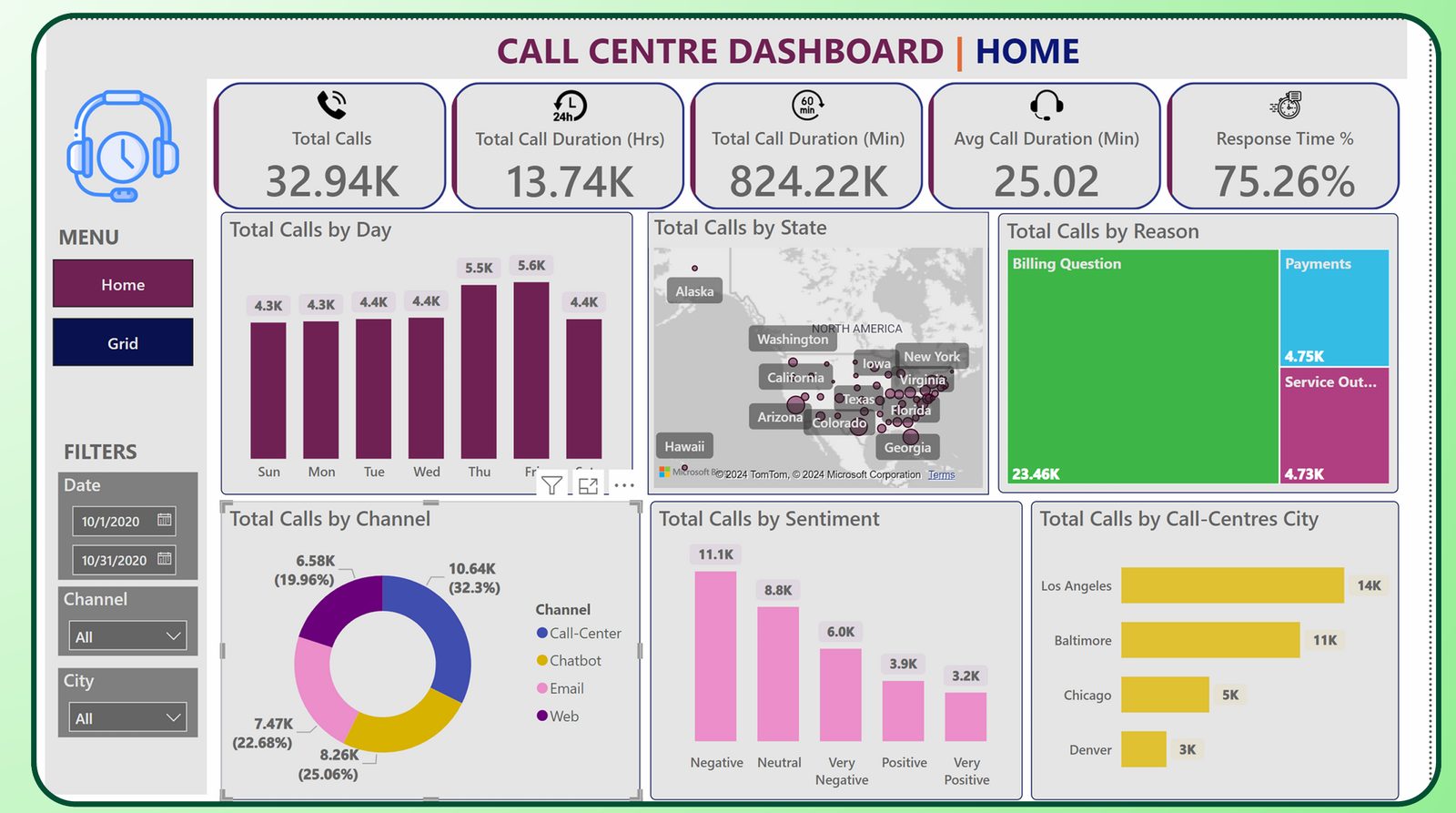
The source had 33,000 records and no sentiment field, so a Python step scored each interaction before any reporting.
Call center analytics Read the work
WORKING TOGETHER
What to expect
- Who does the work
- I do, from the first conversation to the handover. Nothing is passed to someone else.
- Where it happens
- Remotely, with calls planned around overlapping hours. Your data stays in your environment wherever possible.
- Confidentiality
- I am happy to sign an NDA before seeing anything, and I do not name clients.
- Before work starts
- You receive a written scope and a quotation. Nothing begins until you agree to both.
- At the end
- Everything is documented and handed over, with logic in version control. You own it.
- Reply time
- I answer new requests within one to two days.
RELATED SERVICES
Often needed together.
Tell me what you need. I will send you a quotation.
A few lines about the problem and the data behind it are enough to start. I reply with questions, then a clear scope and a quotation.