Evaluation and monitoring
You cannot tell whether your AI answers are right
A demo that answered ten questions well says little about the eleventh. I build the tests and monitoring that show how often an AI system is right, what it costs to run and when it starts to change.
WHEN TEAMS CALL
When LLM evaluation helps
- Quality is judged by trying a few questions.
- Users report wrong answers you cannot reproduce.
- Running cost rises and nobody knows why.
- A prompt change fixes one case and breaks another.
When it is not the right fit. If nothing is built yet, agree the test questions first and build against them.
HOW I WORK
LLM evaluation, step by step
Each step ends with something you can look at, so nothing is built on a guess.
Build a test set
Real questions, with expected answers and questions that should be declined.
Measure the parts separately
Finding the right source and writing a good answer fail for different reasons, so they are scored apart.
Record each run
Input, sources, output, time and cost are stored so a bad answer can be traced.
Test before each change
Prompts and models are compared on the same set before release.
Watch it in use
A monitoring view shows quality, cost and declined questions, with alerts on change.
WHAT YOU GET
Deliverables
- A reusable evaluation set
- A quality report with the failures explained
- Run logging and a monitoring view
- A release check for prompt and model changes
WHAT I NEED
To get started
Access to the system or its logs, and someone who can say what a correct answer looks like.
Further reading: the NIST AI risk management framework.
QUESTIONS
Before you ask
Can you evaluate a system you did not build?
Yes. Logs and a test environment are enough to begin.
Do you use a model to grade a model?
For some checks, and only after comparing its grades with human ones on a sample.
How large should the test set be?
Large enough to cover the real kinds of question. A smaller set of real cases is worth more than a large set of invented ones.
RELATED WORK
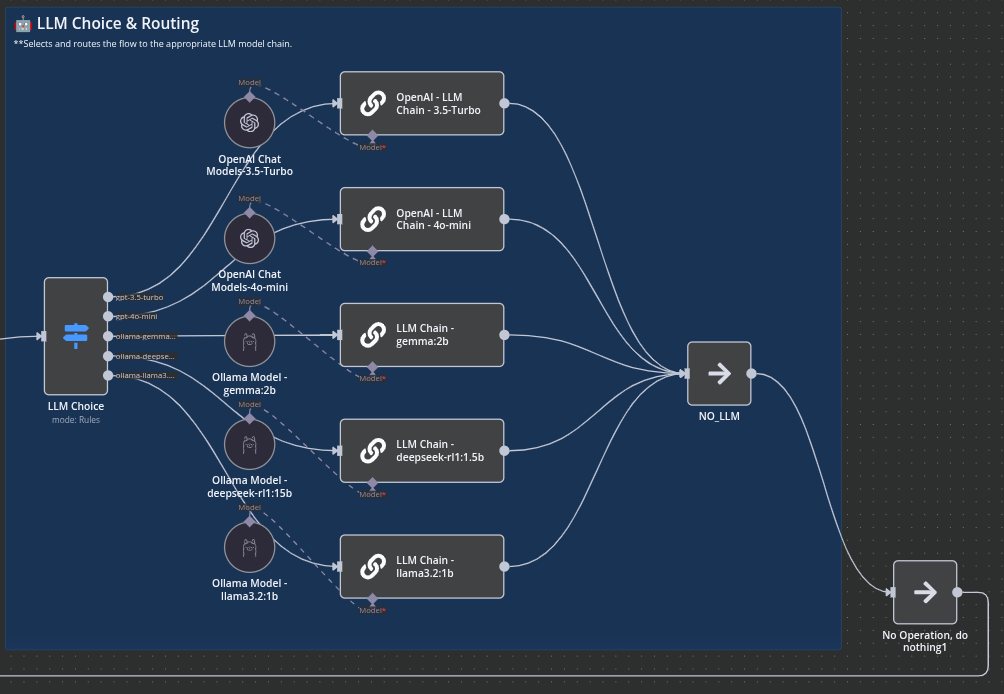
Each request goes to the model that suits it, so simple work does not pay for a large model.
LLM routing system Read the work
WORKING TOGETHER
What to expect
- Who does the work
- I do, from the first conversation to the handover. Nothing is passed to someone else.
- Where it happens
- Remotely, with calls planned around overlapping hours. Your data stays in your environment wherever possible.
- Confidentiality
- I am happy to sign an NDA before seeing anything, and I do not name clients.
- Before work starts
- You receive a written scope and a quotation. Nothing begins until you agree to both.
- At the end
- Everything is documented and handed over, with logic in version control. You own it.
- Reply time
- I answer new requests within one to two days.
RELATED SERVICES
Often needed together.
Tell me what you need. I will send you a quotation.
A few lines about the problem and the data behind it are enough to start. I reply with questions, then a clear scope and a quotation.